
Not All Outdoor EnclosureSystems Are Designed The Same
Outdoor enclosure systems are often grouped into the same category.
But in practice, many of them are designed around very different priorities.
🔸 Some focus primarily on short-term weather separation.
🔸 Others prioritize seasonal flexibility or temporary protection.
🔸 Some are intended to simply reduce exposure.
🔸 Others are engineered around long-term visibility, environmental comfort, architectural integration, and year-round operational use.
And over time, those differences become increasingly noticeable.
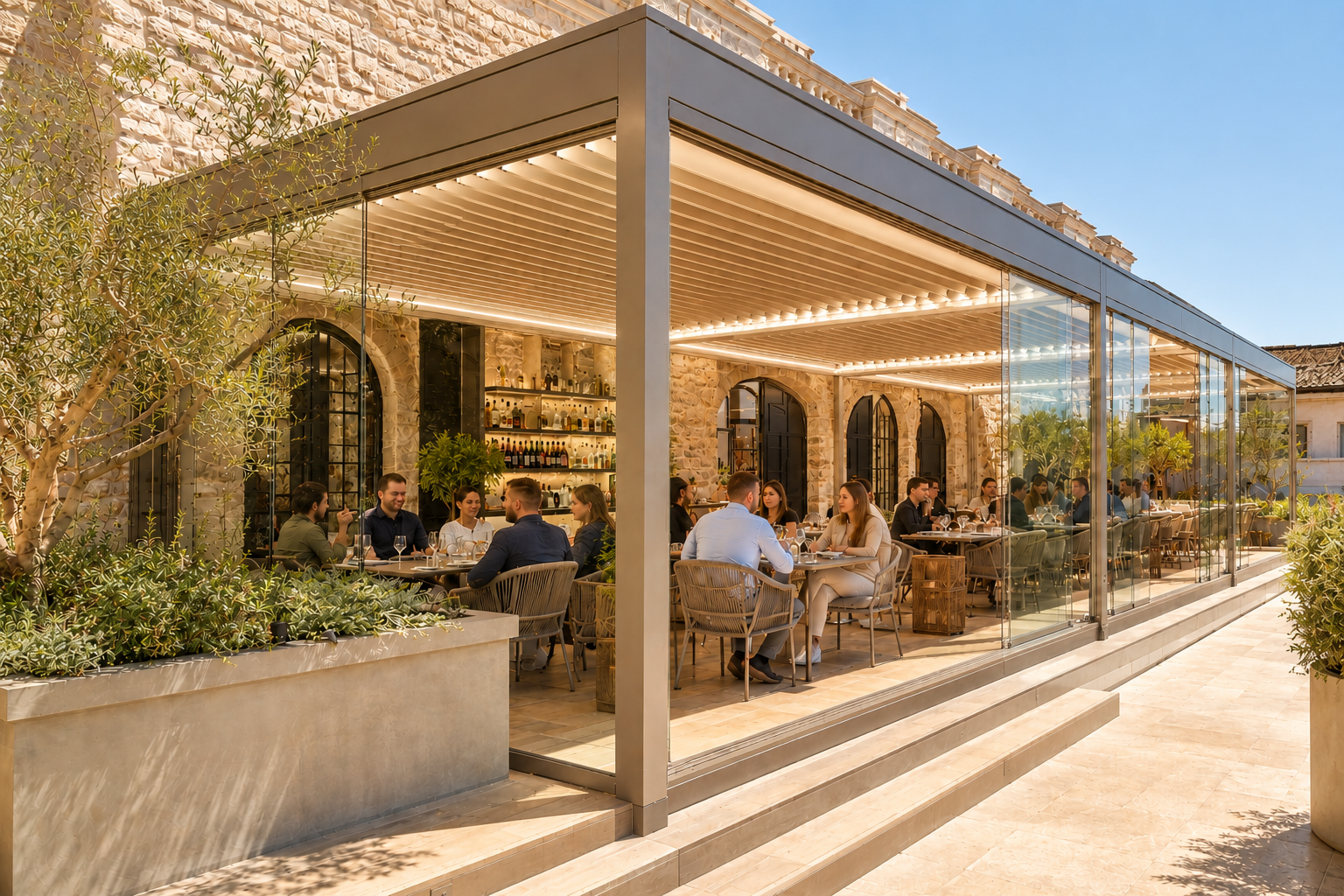
When evaluating outdoor enclosure approaches, the conversation often begins with weather protection.
But over the years, operators began evaluating much more than that.
🔸 How clearly can guests still see through the enclosure?
🔸 How naturally does the environment integrate into the architecture itself?
🔸 How comfortable does the space feel during changing conditions?
🔸 How much operational attention does the environment require over time?
🔸 And how refined does the experience still feel years after installation?
Because outdoor environments influence more than temperature alone.
→ They shape the atmosphere.
→ Guest perception.
→ Operational flow.
→ Visual openness.
→ Daily usability.
And ultimately, how connected the outdoor experience feels to the rest of the property itself.
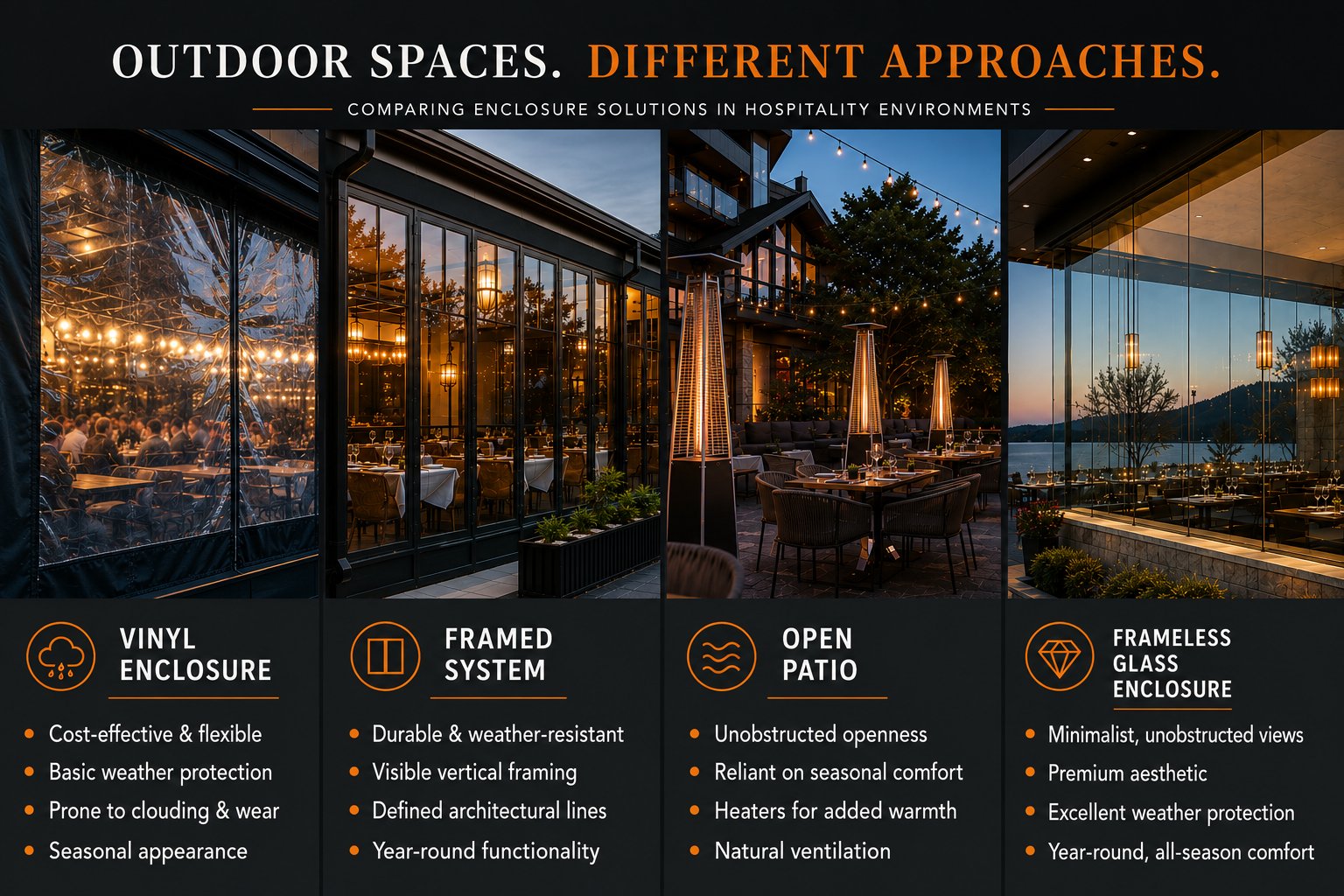
Many outdoor protection systems improve conditions initially.
But systems designed primarily around temporary separation often still leave operators managing visibility degradation, fluctuating comfort levels, seasonal replacement cycles, excessive heater dependence, and environments that begin feeling less refined over time.
The long-term success of an outdoor space is rarely determined by weather protection alone.
It is shaped by how naturally the environment supports daily operations, how guests experience the space emotionally, how well the system continues performing visually and operationally over the years, and how confidently operators can continue using the environment throughout changing conditions.
That distinction becomes increasingly important as outdoor hospitality expectations continue evolving.
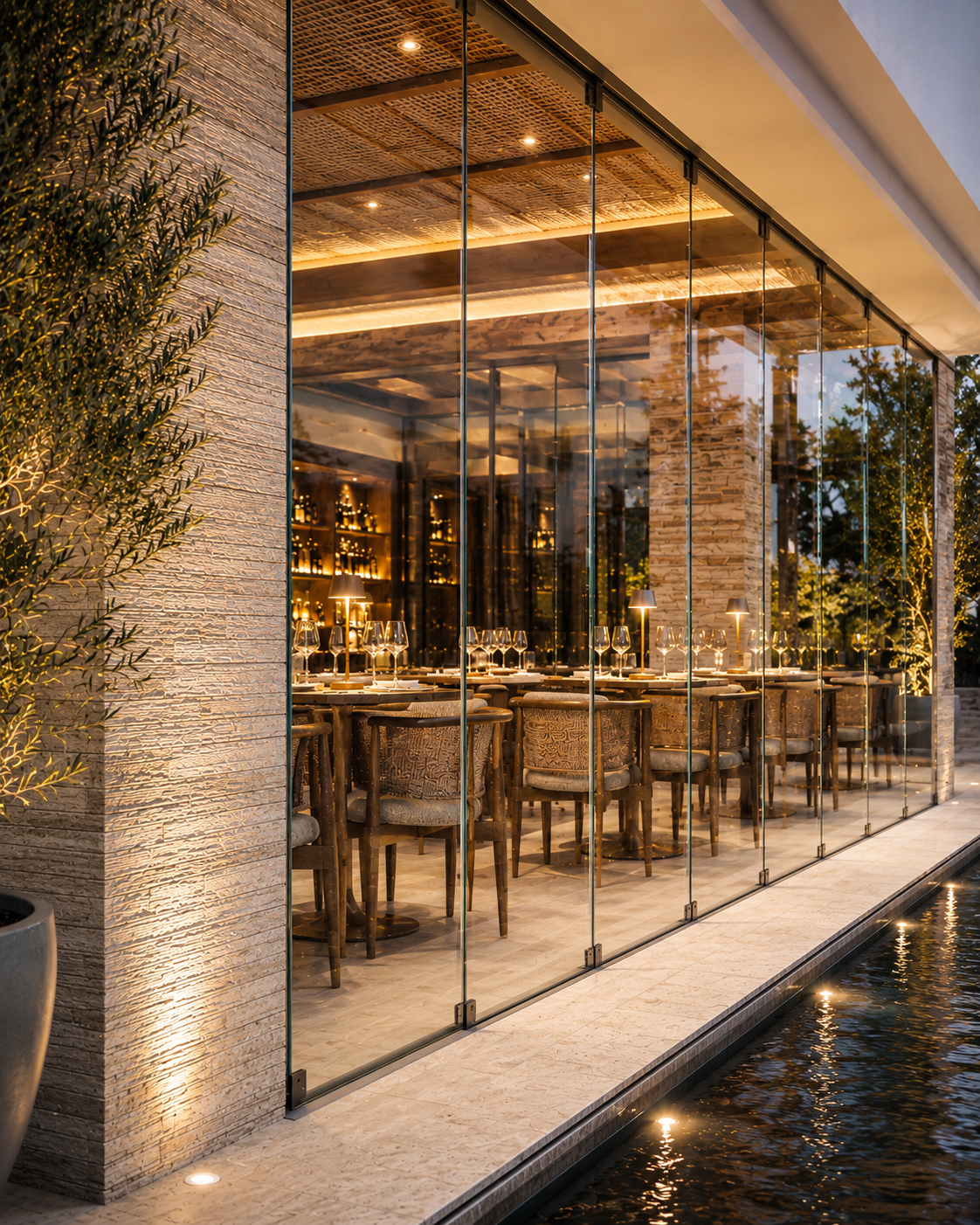
How Slide Clear Supports The Outcome
Slide Clear projects are often centered around creating outdoor environments designed for visual openness, long-term usability, refined architectural integration, and more dependable environmental comfort throughout changing seasonal conditions.
As expectations around outdoor space performance continue evolving, the environments that feel most successful are increasingly the ones designed to support both hospitality function and long-term guest experience together.
—
Because outdoor spaces are no longer judged only by how they look on installation day
They are judged by how they continue functioning years later.
