
It’s Friday dinner service. A restaurant’s patio is covered, but rain starts blowing in through one open side. The outer row of tables gets wet, and the team has fewer seats available during the dinner rush.
When a restaurant client tells you their covered patio still loses tables in the rain, start with one question:
“Which tables do you stop seating first when it rains?”
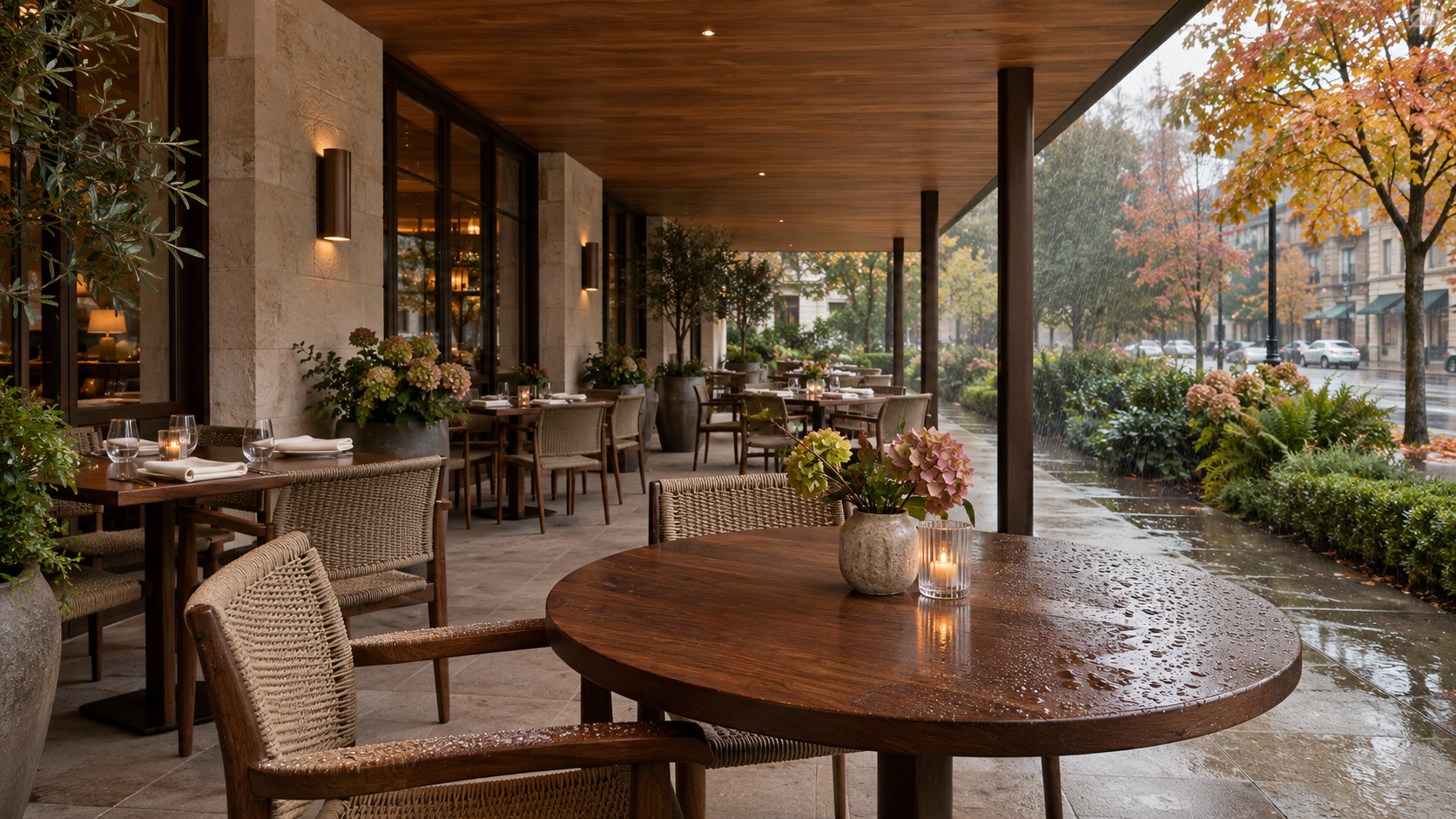
Let the seating layout guide the recommendation.
If the same row gets wet each time, start by assessing the opening beside it. If different sections get wet depending on the wind direction, consider the patio as a whole before recommending which sides to enclose.
On a site visit, ask the operator to walk you through their seating layout. Mark the tables they take out of rotation and the openings they’d like to keep clear on better days.
That gives you a practical way to explain where glass could help and why you’re recommending it there.
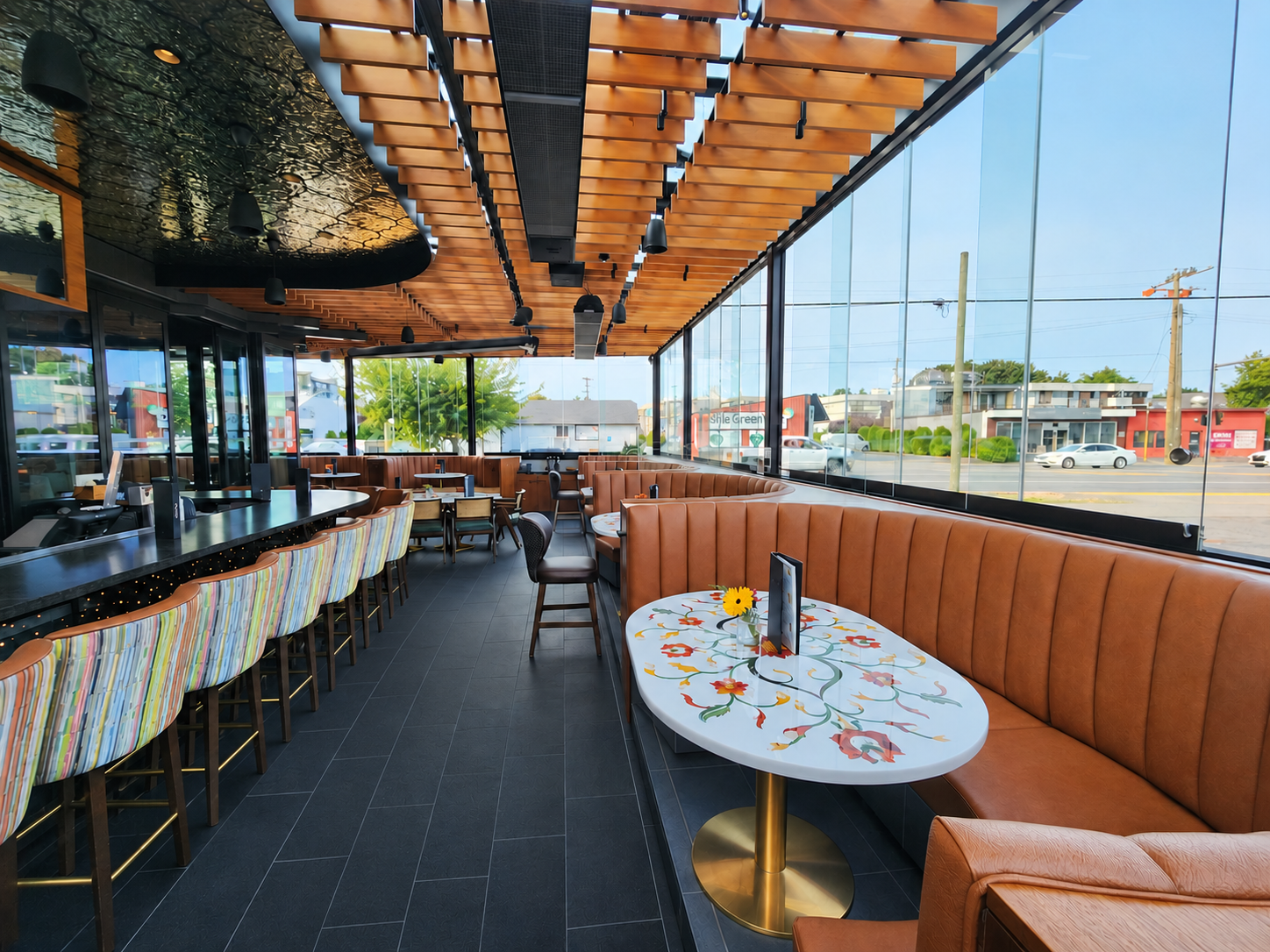
Show your client what changes during service.
With a Slide Clear operable glass system, the restaurant team can close the glass along an exposed side to help shelter nearby tables from wind-driven rain while keeping the view.
When conditions improve, they can open the glass again for open-air dining.
When you present your quote, point out which tables the proposed layout would help shelter. That helps the operator weigh the cost against how often those seats come out of rotation.
Bring it back to the tables they want to keep available through fall and winter, then assess what their existing roof and structure can accommodate.
OUTDOOR SPACES DESIGNED TO PERFORM.
ANY SEASON. ANY DAY. ANY HOUR.
To discuss the right system for your project or product offering,
contact info@slideclear.com.
